Advantages of the Smart Thermostat: Comfort and Savings at Your Fingertips
A smart thermostat is revolutionizing the way households manage their thermal comfort.
It combines technology, convenience, and energy savings to deliver an unparalleled experience.
But what are its real benefits? Here’s an overview of the advantages that should convince even the most skeptical.
What is a smart thermostat and why install one?
A smart thermostat is an intelligent device that allows you to regulate your home’s temperature remotely, via a mobile app or personalized scheduling.
Thanks to this technology, your heating adapts to your schedule: it pauses while you’re away and restarts just in time for your home to be at the right temperature when you return. No more freezing houses after a long trip or unnecessary heating while you’re out!
1. Substantial energy savings
The main advantage of a smart thermostat lies in its potential to reduce energy consumption. According to ADEME, these devices can save up to
15% to 30% on your heating bill, which is far from negligible.
For an annual bill of €1,500, this represents savings of up to €450 per year.
- Presence detection: the heating automatically adjusts if no one is home.
- Weather forecast integration to optimize energy consumption.
In addition to easing your finances, these savings actively help reduce your household’s carbon footprint.
2. Customized thermal comfort
Another undeniable benefit is the comfort provided by a smart thermostat. Imagine coming back from a winter vacation: before, you had to choose between heating your home unnecessarily for days or enduring several hours of cold upon arrival. With a smart thermostat, this dilemma is a thing of the past.
Thanks to scheduling or remote control, you can activate the heating just before you return. Your home welcomes you with the perfect temperature, without any waste.
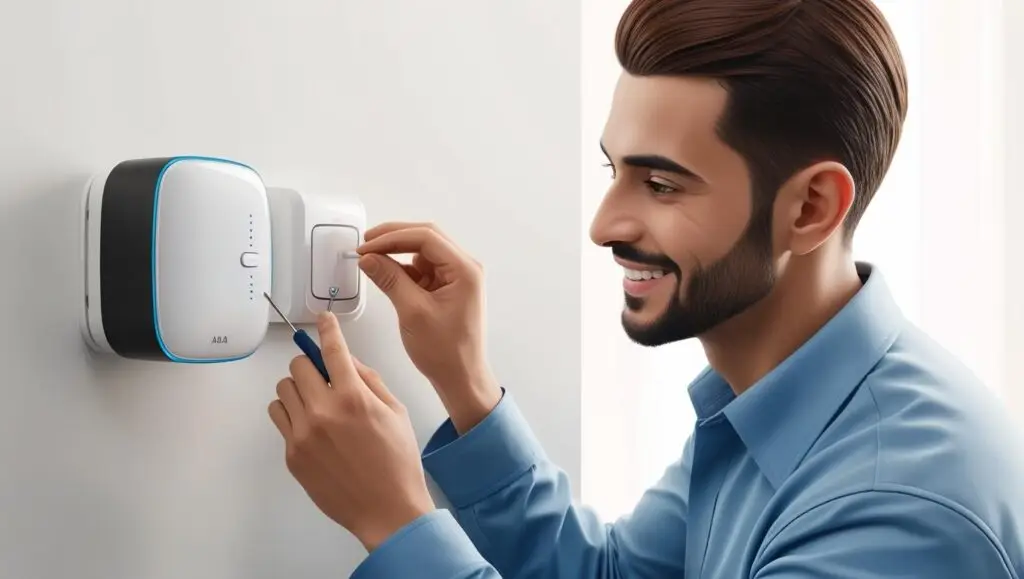
3. Easy installation and use
One of the common concerns among homeowners is the fear of complexity, whether during installation or daily use. Fortunately, modern smart thermostats are designed to be accessible to everyone.
- Installation: Specialized companies organize their field activities by geographic zones,
reducing lead times and simplifying appointment scheduling. - Usage: The interfaces are intuitive, and a mobile app lets you
control your heating remotely.
4. Another advantage: an eco-friendly gesture
By limiting energy consumption, smart thermostats directly reduce the CO2 emissions associated with heating. On a large scale, this technology therefore makes a significant contribution to the fight against global warming. Adopting a smart thermostat means combining comfort, savings, and environmental responsibility.
5. Reliable and accessible technology
Although adding a connected device may raise concerns about breakdowns, the large-scale deployment of these technologies has ensured their robustness. Manufacturers are constantly investing in optimizing their products, guaranteeing reliability.
6. A cost-effective solution in the medium term
A smart thermostat represents an initial investment of between €150 and €250, installation not included. But thanks to the savings it generates, this cost is quickly offset.
In one or two years, it becomes a source of net savings. From then on, the smart thermostat offers only advantages.
Certain government incentives, such as the “MaPrimeRénov’” scheme, can also help reduce installation costs, making this technology even more accessible.
7. Innovative features for a simplified daily life
- Daily scheduling: Adapt your heating to your schedule, day by day.
- Remote control via a mobile app: Change settings wherever you are.
These innovations provide valuable flexibility and peace of mind for managing your thermal comfort.
Why choose Cadulis for optimal deployment?
Cadulis streamlines the entire process of deploying smart thermostats, from appointment scheduling to sending installation reports. Thanks to optimized management, field activities are efficiently planned, ensuring a smooth and professional experience for the end user.
Conclusion: Adopting a smart thermostat, a winning choice
Between financial savings, thermal comfort, and ecological commitment, smart thermostats have everything to win you over. If you’re still hesitating, remember: it’s not just a gadget, but a real investment in your quality of life and for the planet.